Struggling With Serious Behaviour Problems?
You Don’t Have to Face This Alone.
Kind, science-based support for aggression, guarding, separation issues, anxiety, and more.

07888 870151
When Your Dog's Behaviour Becomes Difficult to Understand
Living with challenging behaviour can affect every part of daily life. Whether you're facing aggression, resource guarding, separation-related problems or other complex concerns, understanding what's behind your dog's behaviour is the first step towards finding a way forward.
Over 30 years helping dogs and their owners across Dorchester, Blandford Forum and the surrounding villages in Dorset.
In-depth Assessment
Understanding what is behind your dog's behaviour
Personalised Support
A tailored plan for you and your dog
Veterinary collaboration
Working with your vet from the outset
When Living With Your Dog Feels Overwhelming
I totally get it... You love your dog, but God, their behaviour is driving you up the wall.
Visitors don't dare to enter the house unless the dog is locked up behind three doors, in a crate with a muzzle on. And even then they're watching the doors, choosing to sit as close to the exit as humanly possible.
You are constantly worried about what might happen if your dog manages to get out.
Or maybe they are fine with visitors, but life is less than perfect as your dogs just don't get on. Caught in the middle, you don't know which dog to blame and which to cuddle.
And then, as if all that is not enough, your dog decides that you leaving the house means the world is ending and they just can't cope with your absence. So you are pretty much housebound and left to wonder whether you will ever be your own person again.
Instead of being able to relax at home, stress levels soar as you are left to manage your dog's behavioural issues from the moment you get up till you crash at night, exhausted to the bone.
It isn't just your dog that's affected. Your home life, your confidence and your relationships with family and friends are at rock bottom.
You may have tried everything you can think of, followed conflicting advice and spent countless hours searching for answers.
Yet nothing seems to change.
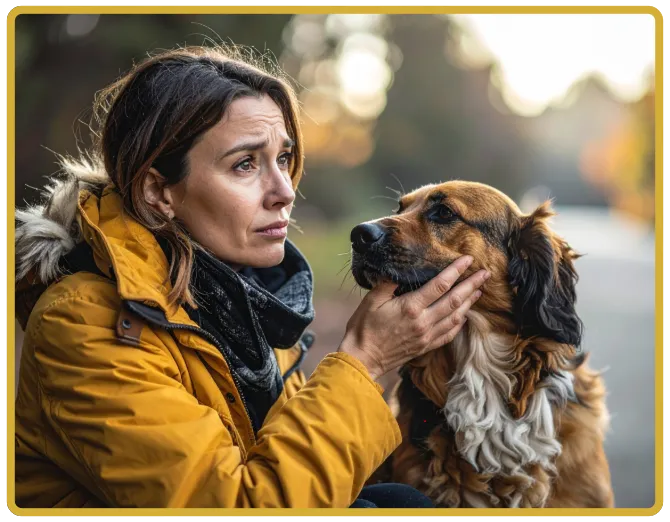
I want you to know that you don't have to figure this out on your own.
Behind the behaviour is an individual dog with their own experiences, emotions and needs. Understanding those is where meaningful change begins.
Through an in-depth behavioural consultation, we can explore the bigger picture, investigate what may be contributing to your dog's difficulties and begin developing a practical, personalised plan to help you both move forward.
Does Your Dog Need
a Behaviour Consultation?
Living with a dog that has serious behavioural problems can take over your home and destroy your peace of mind. However, not every challenging behaviour needs a full Behaviour Consultation. Sometimes what appears to be a serious issue simply needs more targeted training to resolve the struggle.
But, there are times when simply teaching your dog what to do differently isn't enough. When fear, anxiety, aggression or physical discomfort may be influencing your dog's behaviour, we need to look a little deeper.
When we need to go beyond training
and consider a Behaviour Consultation
When your dog is:
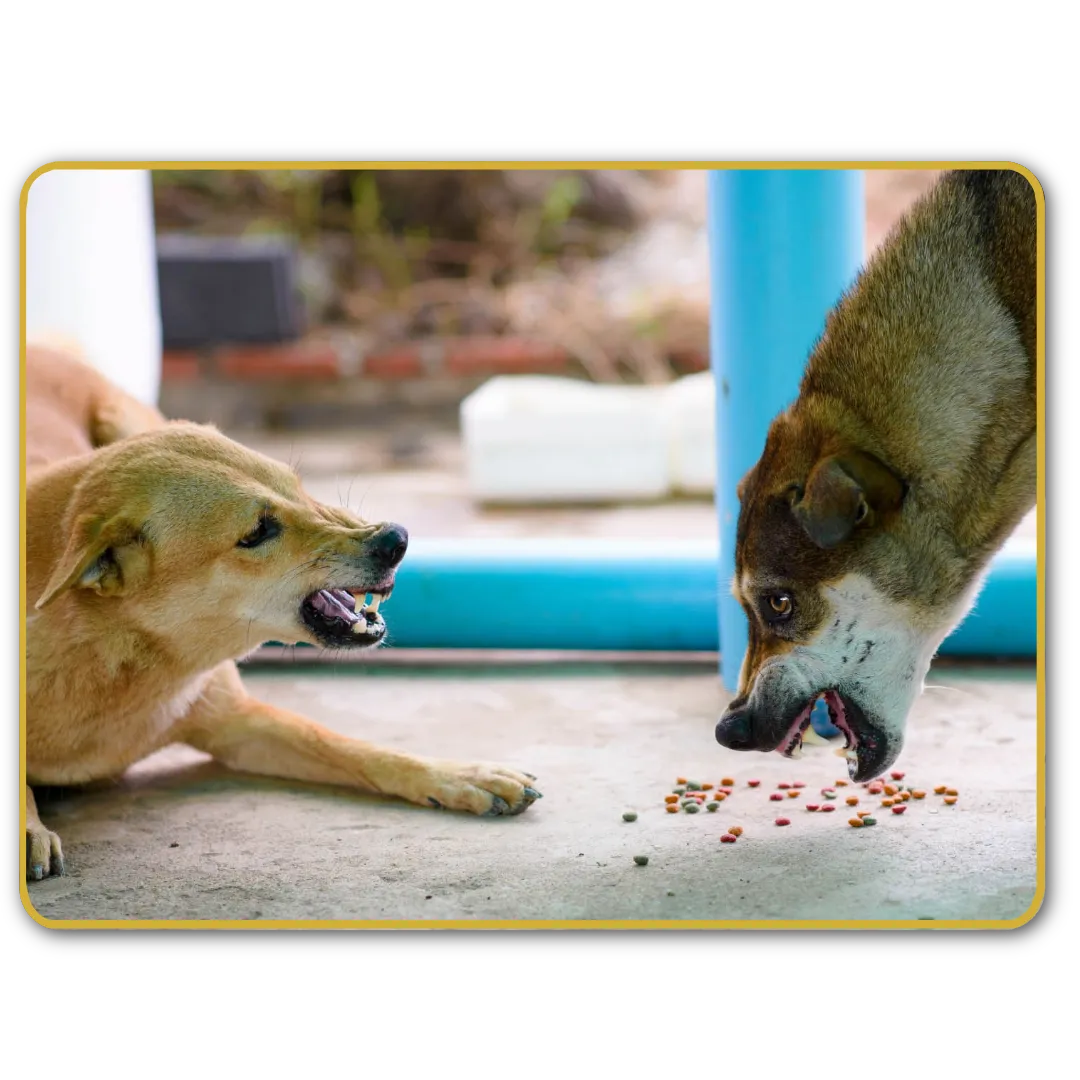
Showing aggression towards people or other animals.
Guarding food, toys, resting places or even people.
Fighting or experiencing ongoing conflict with another dog in your household.
Becoming distressed or panicked when left alone.
Struggling with significant fears, phobias or anxieties.
Displaying unusual, repetitive or concerning behaviours that are difficult to explain.
Not Sure What Kind of Help
Your Dog Needs?
Sometimes it is difficult to know whether you are dealing with a true behavioural problem or communication and training issues.
That's absolutely normal, and you don't have to work that out for yourself or before contacting me.
Tell me a little about what's happening, and we can discuss whether your dog would benefit from training, a reactivity programme, or a more comprehensive behavioural consultation.
Whether your dog's difficulties have developed suddenly or gradually over time, all behavioural consultations are carried out on veterinary referral, because your dog's physical health is an important part of understanding their behaviour.
Has Your Dog's Behaviour Changed Suddenly?
You know your dog better than anyone, so when they suddenly start to act differntly and completely out of character it is worth paying attention.
If, for example, your dog has always been friendly and comfortable around people, but seemingly overnight started growling, snapping, becoming aggressive when someone approaches, or maybe withdraws, hides or becomes anxious we need to make sure there isn't something else going on.
Whatever the change, if your dog suddenly starts to behave differently from their usual self, then your first port of call should be your vet.
Pain, illness and other medical conditions can have a significant impact on how a dog behaves, even when they appear perfectly healthy.
Before we treat a sudden change as a training or behavioural problem, it's important to investigate whether there might be an underlying medical reason. Once your vet has assessed your dog, we can discuss whether a behavioural consultation is appropriate and explore what other factors might be contributing to their behaviour.
How It Works
Your Journey Towards
Understanding
Your Dog
Every dog is different, and so is every behavioural problem.
That's why my consultations aren't built around a one-size-fits-all approach.
We take the time to explore what's happening, understand what may be contributing to your dog's behaviour,
and work towards a plan that makes sense for you both.
01
Let's Talk & Get Your Vet Involved.
We begin with a conversation about the challenges you're experiencing and whether a full Behaviour Consultation is the right approach.
As all my behavioural consultations are carried out on veterinary referral, I'll provide you with a simple referral form to pass on to your vet.
Your vet completes the form and can return it directly to me or to you, in which case you'll simply need to forward it on.
This gives me important information about your dog's health and medical history, helping us consider any physical factors that might be contributing to their behaviour.
02
Getting to Know Your Dog.
Before we meet, I'll ask you to complete a detailed behavioural history questionnaire.
We'll explore your dog's background, daily routines, relationships, experiences, and the situations you're finding difficult.
Don't worry about having all the answers. The questionnaire simply gives me a starting point and helps us make the most of our time together.
03
The In-Home Behaviour Consultation.
I'll visit you and your dog at home for approximately 2–3 hours, where we can explore what's happening in the environment your dog knows best.
We'll talk through your dog's history, look at their daily life and investigate the factors that may be contributing to their behaviour.
I'll observe your dog where appropriate, but we won't deliberately put them into a frightening or potentially dangerous situation just to demonstrate the problem.
This is about understanding your dog, not testing how far we can push them.
04
Understanding the Bigger Picture & Building Your Plan.
Following our consultation, I'll bring everything together using the MHERA behavioural assessment framework.
This helps me look beyond the behaviour itself, exploring your dog's underlying mood, emotional needs, daily wellbeing and the factors that may be maintaining their behaviour.
I'll then prepare a detailed written Behaviour Report and a personalised Behaviour Modification Plan, with practical recommendations to help you and your dog move forward.
Your referring vet will also receive a summary of my findings, so we can work together in supporting your dog's wellbeing.
And what happens after that?
If your dog would benefit from additional individual training or behavioural support,
we'll discuss the most appropriate next steps and how I can help you put the plan into practice.
What Happens
During Your
Behaviour Consultation
First things first. You don't need to have a perfectly behaved dog or a spotless house when I arrive!
I'm coming to understand your dog and the challenges you're facing, not to judge you or how you live.
Before the visit, we'll have discussed any concerns about introducing me to your dog and agreed on how to manage things safely. If that means your dog needs to stay in another room while we talk, that's absolutely fine.
Getting to the Heart of the Problem
We'll spend time talking through your dog's history, their daily routines, relationships, experiences and the behaviours that are causing concern.
I want to know what life is really like for you and your dog. Not just what happens when things go wrong, but what happens on an ordinary day, too.
We'll explore when the difficulties first appeared, what seems to make them better or worse, how your dog responds in different situations, and what you've already tried.
Sometimes, seemingly insignificant details can help us piece together a much bigger picture.
Understanding Your Dog as an Individual
Where appropriate and safe, I'll observe your dog in their familiar surroundings, paying attention to their body language, interactions and responses to everyday situations.
But I won't ask you to provoke aggression, frighten your dog or deliberately create a situation that could put anyone at risk.
There is far more to understanding behaviour than simply watching a dog do something we don't want them to do.
We'll also work through some of the MHERA assessments together. These help us explore your dog's general mood state, emotional wellbeing, and how they're experiencing everyday life.
I'll also ask you to carry out a cognitive bias test with your dog. This is best done when I'm not around, in your dog's familiar environment, when they're feeling relaxed and comfortable.
This test helps us discover whether your dog is more of an optimist or a pessimist!
Does he currently tend to expect good things to happen, or does he approach uncertain situations with a more pessimistic outlook?
Whatever the outcome of this test it gives us another valuable piece of the puzzle when exploring your dog's general mood state and emotional well-being.
Putting the Pieces Together
As we work through the consultation, I'll share my observations and explain what I'm seeing where I can.
Sometimes the reasons behind a dog's behaviour become clear quite quickly. Other times, things are more complicated, and I need to bring together everything we've discussed and observed before the bigger picture starts to emerge.
I won't jump to conclusions or offer quick answers just for the sake of having something to tell you.
There will be plenty of opportunities to ask questions, share your concerns and discuss what is realistically achievable for you and your family.
Where appropriate, we'll also discuss practical ways to manage difficult situations while I complete my assessment and prepare your written Behaviour Report and Behaviour Modification Plan.
My aim is for you to finish our time together feeling heard, better informed and with a clearer understanding of what happens next.
Understanding why the behaviour is happening is the key to helping your dog feel safe, supported, and able to learn new behaviours.
What's Included in
Your Behaviour Consultation?
A behavioural consultation is about much more than spending a few hours observing your dog.
The work begins before I arrive and continues long after I've left, as I bring together everything we've discovered
to understand what's happening and develop a plan that's right for you and your dog.
What's Included
Veterinary referral review
Reviewing the information provided by your vet to help identify any health concerns that may be contributing to your dog's behaviour.
Detailed behavioural history analysis
Looking at your dog's background, experiences, routines, and the challenges you're facing.
In-home consultation
A 2–3 hour consultation – Taking time to talk, observe, and explore your dog's behaviour in familiar surroundings.
MHERA assessments
Exploring your dog's emotional wellbeing, general mood state, and the factors that influence their everyday life.
Cognitive bias testing
Guidance on carrying out a simple assessment to explore whether your dog currently has a more optimistic or pessimistic outlook.
A comprehensive written Behaviour Report
Bringing together my observations, findings and behavioural analysis.
Your personalised Behaviour Modification Plan
Practical recommendations and strategies tailored to your dog's individual needs and your circumstances.
Veterinary collaboration & summary report
Liaising with your vet about any medical issues that may influence your dog's behaviour or need to be considered when developing their Behaviour Modification Plan. Your vet will also receive a written summary of my findings and recommendations.
Your Behaviour Consultation
£475
Comprehensive assessment, written findings and personalised recommendations.
Additional training arranged separately if required.

Why Work with Me?
Looking Beyond the Behaviour
When it comes to behavioural problems, I believe we need to look at the whole picture, not just the dog or the behaviour that's causing concern.
Over more than 30 years of working with dogs and their families, I've learned that what appears to be a straightforward behavioural problem can sometimes be far more complicated than it first seems.
I've encountered situations where the dog's behaviour isn't necessarily the biggest issue. Sometimes it's the way that behaviour is perceived, the expectations placed on the dog, or the interactions between family members that are contributing to the difficulties.
Dogs don't live in isolation. They're part of our families, sharing our homes, routines and everyday experiences. And just as their behaviour affects us, our behaviour and emotions can influence them.
That's why I take a holistic approach to behavioural consultations.
I look beyond the behaviour itself to explore your dog's physical and emotional wellbeing, their environment, past experiences, daily routines and, importantly, the relationships and interactions within the family.
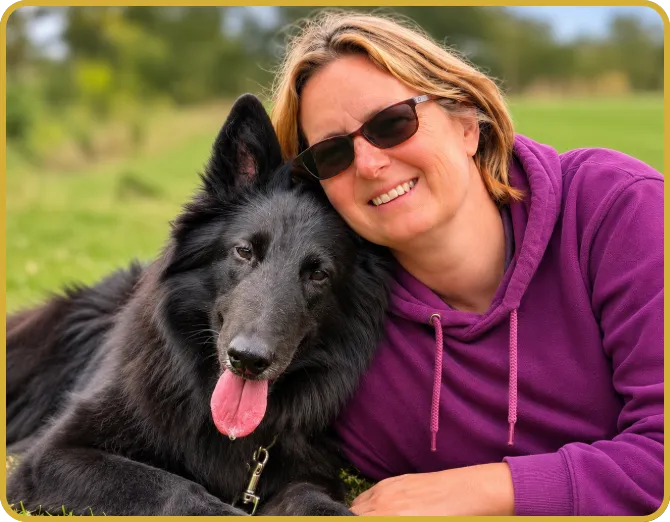
I hold an Advanced Diploma in Companion Animal Behaviour and Training from COAPE (Centre of Applied Pet Ethology), and my work combines behavioural science with the practical knowledge and experience I've gained from working with dogs since 1994.
But understanding behaviour isn't just about qualifications or knowing the science. It's about listening, observing, asking the right questions and sometimes challenging our assumptions about why a dog behaves the way they do.
My role isn't to find someone to blame. It's to understand what's happening and help everyone involved find a better way forward.
That means honest advice, practical recommendations and a personalised approach that considers the needs of your dog and the people who share their life.
Always guided by my belief that training and behaviour modification should be fair, kind and effective.
30+ Years of Experience | COAPE Advanced Diploma | Reward-Based Training
Qualifications
COAPE Advanced Diploma in Companion Animal Behaviour and Training (NOCN 2009)
Alpha Education Puppy Instructors Certificate
Additional Training & Professional Development
Dog Training College Accredited Instructor
Pro Dog Trainer
Ongoing professional development in canine behaviour
Professional Memberships
CABTi
ICAN
UK Dog Behaviour & Training Charter (via CABTi)







Real Dogs. Real Challenges. Real Progress.
We have a Border Collie who is very reactive to noises and transportation. We found Natasja through Find a Dog Trainer. I chose Natasja as she has over 30 years experience of working with dogs.
Natasja has been amazing, really helping to show us how to train our dog with both the noise and with traffic.
Although it's a work in progress, I feel sure with the continued training that we have had, we will end up with a much calmer dog.
I would 100% recommend Natasja!!
Suzanne, guardian of Skye the Border Collie
FAQS
Good Questions,
Honest Answers.
Anything else on your mind? Just ask, I am happy to help.
Do you work with all breeds and ages?
Yes. I work with dogs of all breeds and ages, from puppies through to seniors.
Every dog is an individual, so my approach takes into account their behaviour, physical and emotional wellbeing, experiences, environment and family circumstances.
How far do you travel for behaviour consultations?
I offer in-home Behaviour Consultations throughout Dorset and may also be able to travel to surrounding areas.
Depending on your location, an additional travel fee may apply, but I'll always confirm any costs with you before you book.
Not sure whether I cover your area? Just get in touch and I'll be happy to let you know.
Why do I need a veterinary referral?
Your dog's physical health and behaviour are closely connected. Pain, illness, hormonal changes, sensory decline and other medical conditions can all cause or contribute to behavioural difficulties.
Working on veterinary referral helps us identify and consider any underlying health concerns, ensuring that your dog's physical and emotional wellbeing are both taken into account when developing their Behaviour Modification Plan.
It also allows me to work alongside your vet where medical factors may be influencing your dog's behaviour.
How do I get a referral from my vet?
It's very straightforward. Once we've discussed your dog's difficulties and agreed that a Behaviour Consultation is the right approach, I'll send you a simple referral form to pass on to your vet.
Your vet completes the form and can either return it directly to me or give it back to you to forward on.
Once I've received the completed referral, we can move forward with arranging your consultation.
What if my dog shows aggressive or unpredictable behaviour?
That's exactly the sort of difficulty a behavioural consultation can help us understand.
Aggression can have many contributing factors, including fear, pain, frustration, past experiences and emotional needs. That's why it's important to look at the whole picture rather than make assumptions about what's driving the behaviour.
Before our appointment, we'll discuss how to manage your dog safely during my visit. If that means keeping them in a separate room while we talk, that's absolutely fine.
I won't ask you to provoke your dog's behaviour or put anyone at risk just to demonstrate the problem.
Your dog doesn't need to behave perfectly. I'm there to understand what's happening and help you find a way forward.
Do follow-up sessions cost extra?
Your £475 Behaviour Consultation includes the in-home assessment, detailed written Behaviour Reports to both you and the referring veterinarian, and a personalised Behaviour Modification Plan.
If you would benefit from additional support putting the plan into practice, we can discuss suitable follow-up training or behavioural sessions.
These are booked and charged separately, and I'll always explain the options and costs beforehand.
There's no obligation to book further sessions.
How long does it take to see improvement?
Every dog and every situation is different. Some families notice positive changes quite quickly once we begin addressing the underlying issues. For others, progress takes more time and requires a gradual, structured approach.
Your Behaviour Modification Plan will identify our priorities, outline the steps we need to take and help you recognise signs of progress along the way.
There's no fixed timetable for behavioural change. We'll work at a pace that supports your dog's learning and emotional wellbeing while helping you and your family make everyday life more manageable.
What if I’m not sure whether I need a behaviour consultation or training?
That's absolutely fine. You don't need to work that out before getting in touch.
Sometimes, what appears to be a behavioural problem can be addressed through training, while other situations require a more in-depth assessment.
Simply click “Send a Behavioural Enquiry” and tell me a little about your dog and the difficulties you're experiencing.
I'll review your enquiry and get in touch so we can discuss what's happening and whether individual training, my Chaos to Calm programme or a veterinary-referred Behaviour Consultation would be the most appropriate way forward.
My priority is making sure you and your dog receive the right support, not simply booking you onto a particular service.
Next steps
Let's Find the Right Way Forward
for You and Your Dog
When you're struggling with your dog's behaviour, knowing where to turn isn't always easy.
But you don't have to have all the answers before asking for help.
Tell me a little about your dog and the difficulties you're facing. I'll take the time to review your enquiry and contact you by email within two working days to arrange a chat.
Together, we'll explore what's happening and whether a full Behaviour Consultation, individual training or another approach would be the most appropriate next step.
Because getting the right help starts with understanding what you and your dog really need.

Fun Focus Play®
by Nightsabre Dog Training
Dorchester, Blandford Forum and surrounding villages, Dorset-wide.
Privacy Policy | Terms and conditions
© 2026 Fun Focus Play by Nightsabre Dog Training